


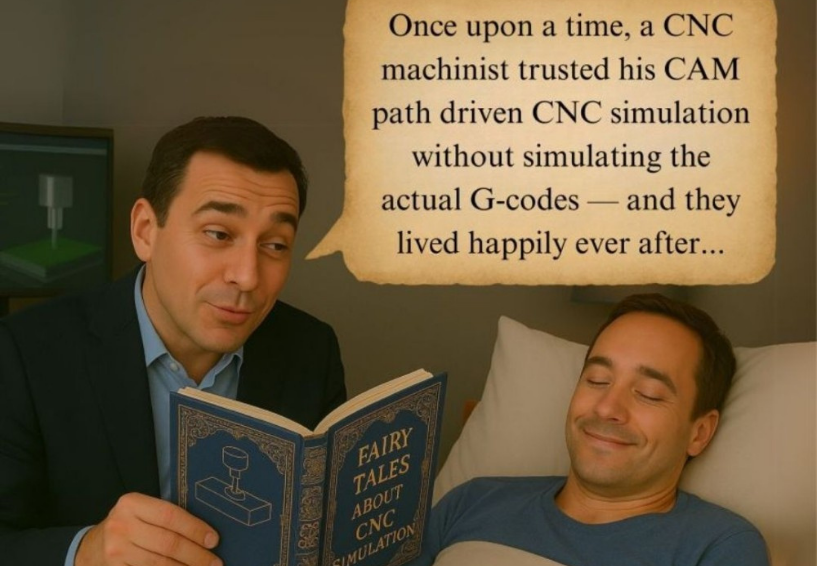
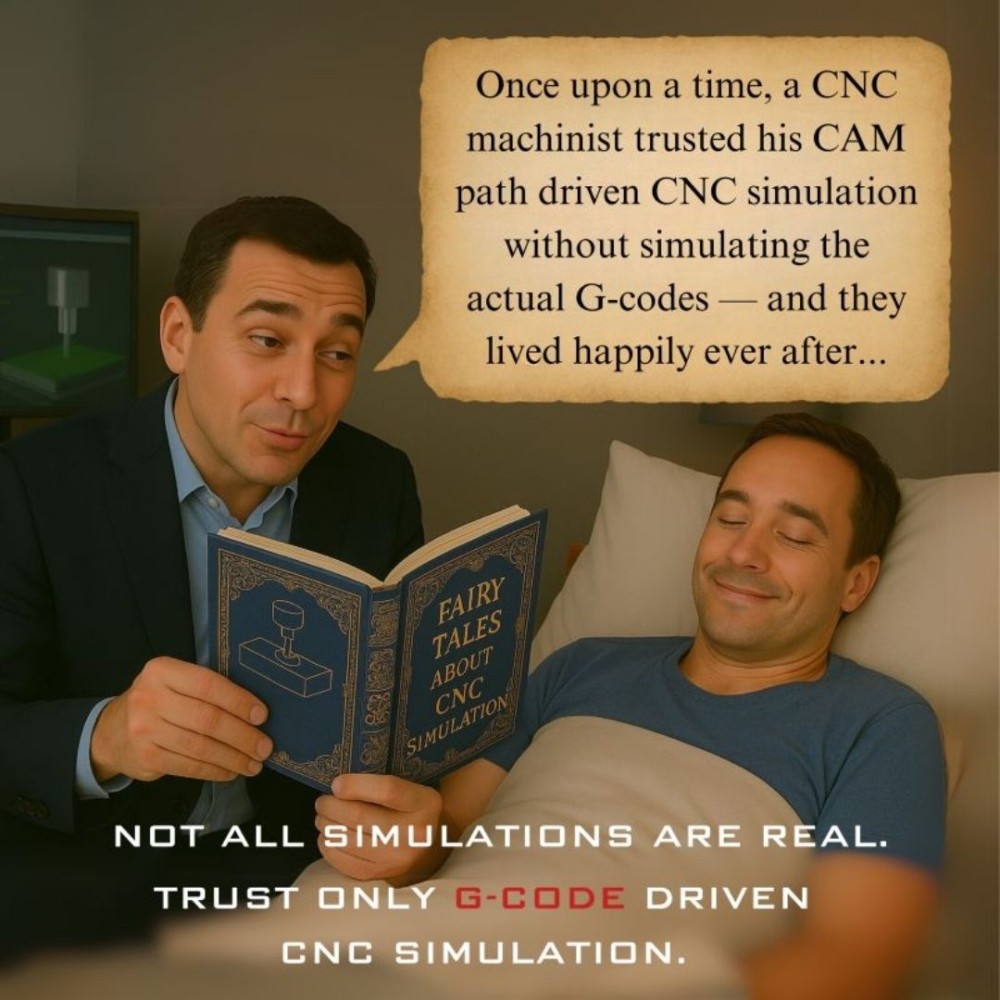
“Once upon a time…” — it might be how stories begin, but in real-world CNC machining, fairy tales rarely end well.
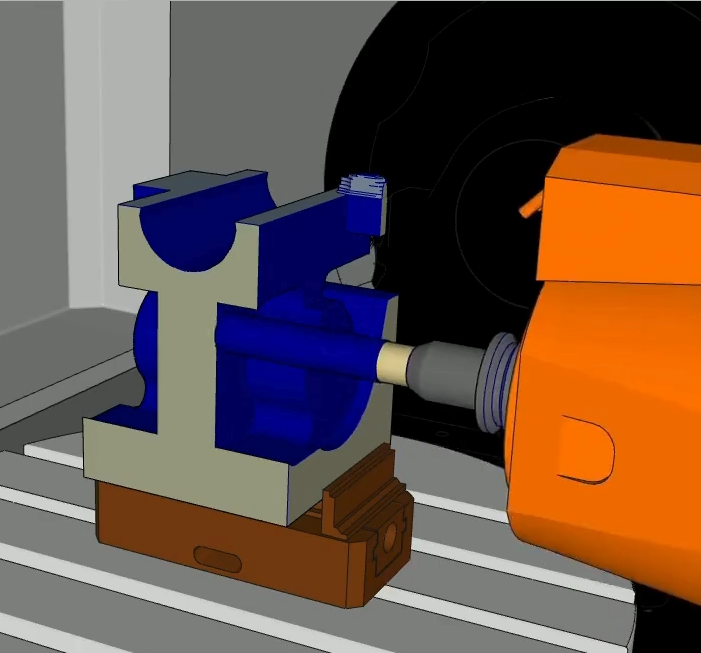
Despite growing complexity in manufacturing, many machine shops still rely heavily on CAM-driven toolpath simulations. These simulations are based on ideal scenarios — they visualize tool movement before post-processing, often giving a false sense of security. The problem? They don’t simulate the actual G-code your machine will run.
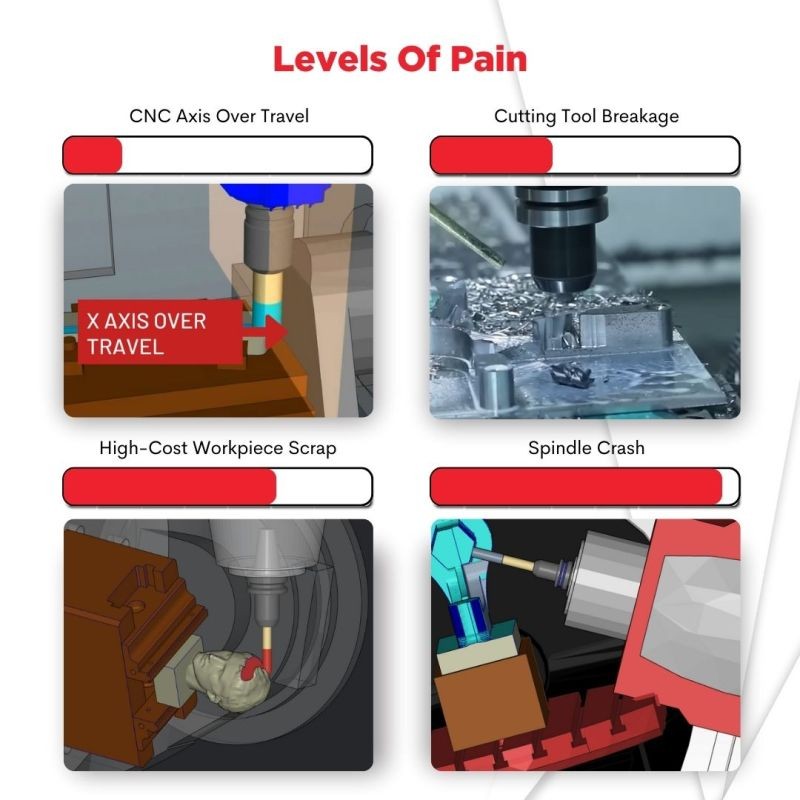
When the Story Turns into a Nightmare
The comfort of CAM simulation can come at a cost:
🔧 A missing retract line…
💥 An unnoticed collision…
🕒 Unexpected rework…
💸 Costly scrap and downtime…
And most of these crashes? They don’t happen during exotic 5-axis aerospace parts. They happen during the “simple jobs” — during tool changes, indexing, and transitions between operations. Exactly the parts most CAM simulations don’t verify.
Simulation vs. Wishful Thinking
Here’s the bottom line:
✅ If it’s not checking the actual NC program line-by-line, it’s not protecting your machine.
✅ If it’s not verifying real feed rates, axis limits, tool motions, collisions, and gouges — it’s not a simulation. It’s just a nice-looking animation.
Real Confidence Comes From Real G-Code
To avoid turning a simple job into an expensive mistake, machinists and programmers need G-code-driven simulation like #MANUSsim. It’s the only way to:
Detect real errors before they hit the shop floor
Optimize cycles based on what the machine actually sees
Ensure safer, faster, and more reliable production
Don’t settle for comfort — demand accuracy.
Because in CNC machining, only the real thing delivers real-world results.